Strange Planets
Steel-Dense Planet
TOI-1853 b · Ultra-dense Neptune
Neptune-sized but 73 times Earth’s mass, giving it a density around 9.7 g/cm³: denser than steel and about six times denser than Neptune. It may be the leftover of violent collisions between young planets.
- Radius
- 3.46 × Earth
- Temperature
- 1,479 K (1,206 °C)
- From Earth
- 538 light‑years
- Density
- Denser than steel: 73 × Earth’s mass in a Neptune-sized ball
- Your weight
- About 6 × what it is on Earth
- Origin
- Probably a violent crash that splashed its lighter layers into space
- Temperature
- About 1,200 °C: metal glowing dull red
- One year
- 30 hours
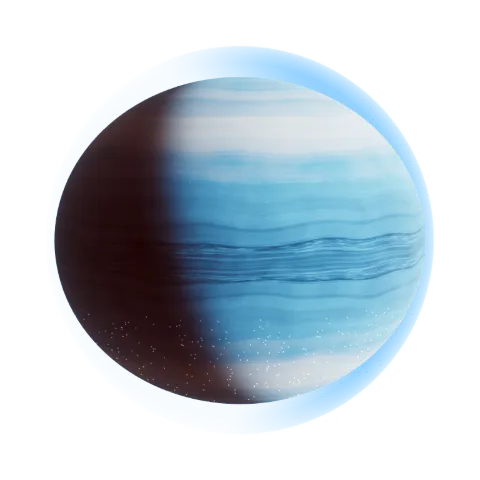
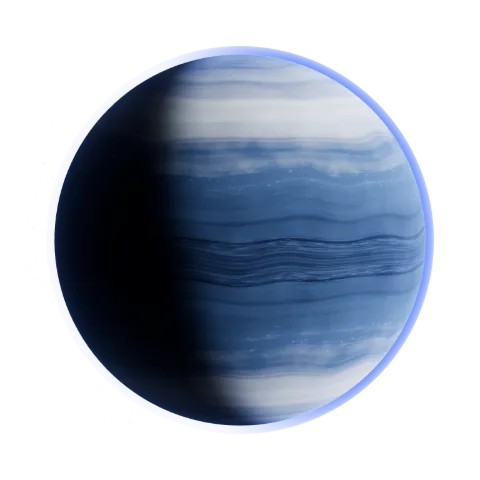
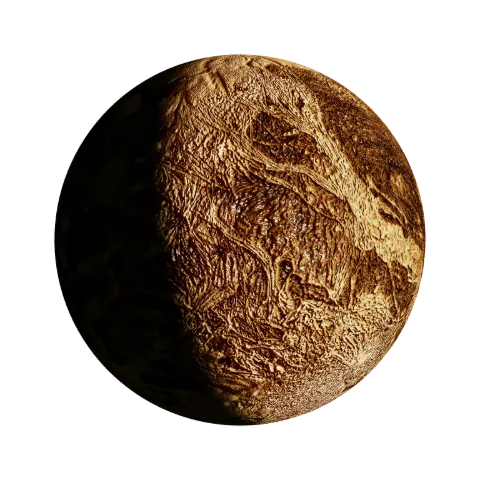
Nothing of its surface is known. This imagines the bare, metal-rich core left after the crash.
Steel-Dense Planet at a glance
- Status
- Confirmed planet
- Radius
- 3.46 × Earth
- Mass
- 0.23 × Jupiter
- Year length
- 1.24 days
- Temperature
- 1,479 K (1,206 °C)
- Host star
- TOI-1853 (K2.5 V)
- From Earth
- 538 light-years
- Discovered
- 2023 · Transit
- Data
- NASA Exoplanet Archive
Facts
- Call it the iron bullet: about the size of Neptune, but far denser than Earth, made largely of heavy metals.
- It probably started as a normal planet, then was hit by another giant object at incredible speed.
- The crash splashed its lighter parts, water, rock and gas, off into space, leaving a bare metal ball.
- Walking on it would feel like being crushed by a giant invisible hand: you would weigh about 6 times as much as on Earth.
History and research
Luca Naponiello’s team announced it in Nature in 2023. TESS saw it cross its star every 1.24 days, and the HARPS-N spectrograph on La Palma weighed it.
Planets this heavy so close to their stars are rare. Models suggest it needed several crashes between young planets, or a migration inwards after gathering much more water, to end up so dense.
Sources: Wikipedia: TOI-1853 b. Checked 27 October 2026.
How big is Steel-Dense Planet?
Steel-Dense Planet is 44,087 km across: 3.46 times as wide as Earth.
Questions about Steel-Dense Planet
How far away is TOI-1853 b?
538 light-years from Earth. Even at the speed of light, the trip would take 538 years.
How big is TOI-1853 b?
Its radius is 3.46 times Earth’s, about 3.5 times as wide as Earth.
How long is a year on TOI-1853 b?
It goes once round its star in 1.24 days. How old would you be there? →
How hot is TOI-1853 b?
About 1,479 K (1,206 °C).
What would I weigh on TOI-1853 b?
At the cloud tops (there is no ground to stand on), gravity is 60 m/s², 6.11 times Earth’s. Scales that read 50 kg on Earth would read about 306 kg on TOI-1853 b. Work out your own weight there →
When was TOI-1853 b discovered?
In 2023, by the transit method: the slight dip in its star’s light each time the planet passes in front of it.
More Exoplanets
All planetsStrange PlanetsEight-Hour-Day GiantBeta Pictoris b · Young giant planetRadius1.65 × JupiterTemperature1,612 K (1,339 °C) Strange PlanetsCotton Candy PlanetWASP-107 b · Super-puffRadius0.937 × JupiterTemperature740 K (467 °C) Strange PlanetsPossible Ocean WorldTOI-1452 b · Super-EarthRadius1.67 × EarthTemperature326 K (53 °C) Strange PlanetsVolcano WorldLP 791-18 d · Earth-sized planetRadius1.03 × EarthFrom Earth86.0 light‑years ExoplanetsDimidium51 Pegasi b · Hot JupiterTemperature1,260 K (987 °C)From Earth50.6 light‑years ExoplanetsOsirisHD 209458 b · Hot JupiterRadius1.36 × JupiterTemperature1,450 K (1,177 °C) ExoplanetsÆgirEpsilon Eridani b · Cold gas giantFrom Earth10.5 light‑yearsMass0.661 × Jupiter ExoplanetsFirst Imaged Planet2M1207 b · Young giant planetTemperature1,250 K (977 °C)From Earth170 light‑years