Earth-like Exoplanets
Our Nearest Neighbour
Proxima Centauri b · Rocky planet
The closest known exoplanet, in its star’s habitable zone just 4.2 light-years away. But Proxima Centauri is a flare star: one outburst in 2016 briefly made it visible to the naked eye, and such blasts may have stripped the planet of any atmosphere.
- Radius
- 1.02 × Earth
- Temperature
- 218 K (-55 °C)
- From Earth
- 4.24 light‑years
- Distance
- 4.2 light-years: the closest known exoplanet
- Flares
- Bursts hundreds of times stronger than the Sun’s, almost daily
- Record
- One flare made the star 14,000 × brighter (in ultraviolet) within seconds
- Air
- Probably stripped away, along with any oceans
- Neighbours
- Alpha Centauri A and B, a brilliant pair of stars
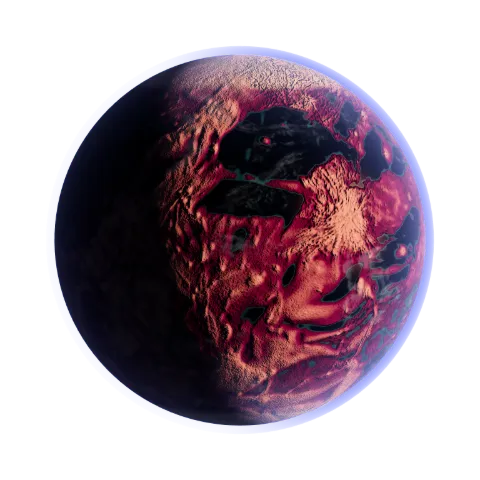
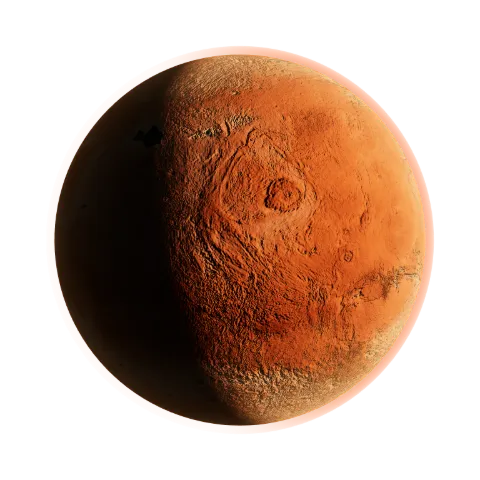
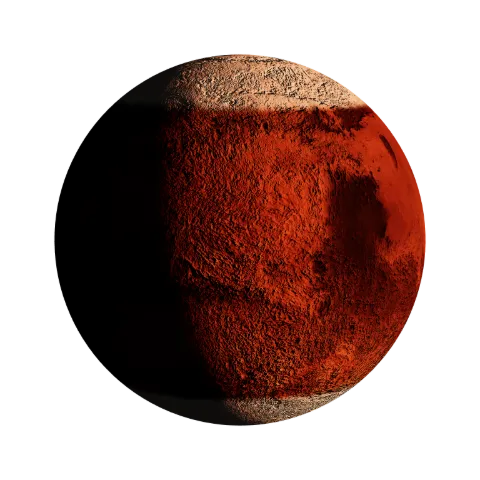
Flares are sped up: one every 30 seconds here. Whether it kept any air is unknown; this shows the bare, airless version.
Our Nearest Neighbour at a glance
- Status
- Confirmed planet
- Radius
- 1.02 × Earth
- Mass
- 1.06 × Earth
- Year length
- 11.2 days
- Temperature
- 218 K (-55 °C)
- Host star
- Proxima Centauri (M5.5 V red dwarf)
- From Earth
- 4.24 light-years
- Discovered
- 2016 · Radial velocity
- Data
- NASA Exoplanet Archive
Facts
- The closest exoplanet to the Solar System, just over 4 light-years away.
- It was long hoped to be a second Earth: a rocky world in its star’s habitable zone.
- The reality is terrifying: its tiny red dwarf erupts with flares hundreds of times more powerful than anything the Sun produces.
- They happen almost daily, blasting the planet with X-rays and ultraviolet light.
- In one recorded event, a flare made the star 14,000 times brighter (in ultraviolet) within a few seconds.
- Over billions of years, this bombardment has likely boiled away any oceans and stripped off its atmosphere.
History and research
Guillem Anglada-Escudé led the Pale Red Dot campaign in 2016, which shared its progress online as observations came in from the HARPS spectrograph in Chile. In 2020 the newer ESPRESSO instrument confirmed the planet and measured its minimum mass at about 1.1 Earths.
The same year it was announced, the Breakthrough Starshot project proposed sending tiny probes there on sails pushed by lasers. At a fifth of the speed of light they would arrive about 20 years after launch. The lasers and sails have not been built.
Sources: Wikipedia: Proxima Centauri b, Wikipedia: Breakthrough Starshot. Checked 27 October 2026.
How big is Our Nearest Neighbour?
Our Nearest Neighbour is 12,997 km across: 3.74 times as wide as the Moon.
Questions about Our Nearest Neighbour
How far away is Proxima Centauri b?
4.24 light-years from Earth. Even at the speed of light, the trip would take 4.24 years.
How big is Proxima Centauri b?
Its radius is 1.02 times Earth’s, about the same width as Earth.
How long is a year on Proxima Centauri b?
It goes once round its star in 11.2 days. How old would you be there? →
How hot is Proxima Centauri b?
About 218 K (-55 °C).
When was Proxima Centauri b discovered?
In 2016, by the radial-velocity method: the slight wobble the planet’s pull gives its star.
More Exoplanets
All planetsEarth-like ExoplanetsEarth-Like NeighbourTeegarden’s Star b · Rocky planet, habitable zoneTemperature277 K (4 °C)From Earth12.5 light‑years Earth-like ExoplanetsNearby Venus-EarthGliese 12 b · Earth-sized planetRadius0.96 × EarthTemperature315 K (42 °C) Earth-like ExoplanetsInner-Edge WorldTRAPPIST-1 d · Rocky planet, inner habitable zoneRadius0.788 × EarthTemperature288 K (15 °C) Earth-like ExoplanetsOcean CandidateTRAPPIST-1 e · Rocky planet, habitable zoneRadius0.92 × EarthTemperature251 K (-22 °C) Earth-like ExoplanetsFrozen-Sea WorldTRAPPIST-1 f · Rocky planet, habitable zoneRadius1.05 × EarthTemperature219 K (-54 °C) Earth-like ExoplanetsOuter Ice WorldTRAPPIST-1 g · Rocky planet, outer habitable zoneRadius1.13 × EarthTemperature198 K (-75 °C) Earth-like ExoplanetsEyeball Ocean WorldLHS 1140 b · Water world candidateRadius1.73 × EarthTemperature226 K (-47 °C) Earth-like ExoplanetsTESS’s EarthTOI-700 d · Rocky planet, habitable zoneRadius1.07 × EarthTemperature269 K (-4 °C)